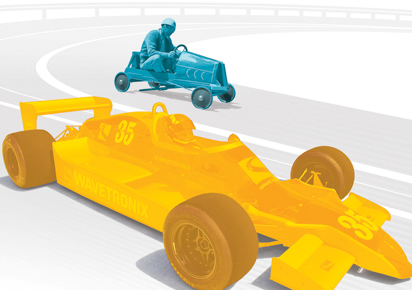
What decades of innovation in traffic detection can teach us about the future of mobility
In this episode of the Wavetronix Pulse Podcast, we sit down with Dale Bartlett to explore how traffic detection has evolved—and where it’s headed next. With decades of experience in the transportation industry, Bartlett offers a unique perspective on how detection technology has shaped modern traffic management.
The conversation highlights a central theme: better data has always been the foundation of better traffic operations.

How Traffic Detection Has Changed Over Time
Traffic detection hasn’t always been as advanced—or as reliable—as it is today.
Early systems relied heavily on in-road technologies, such as inductive loops, which required cutting into pavement and ongoing maintenance. While effective in their time, these systems came with limitations:
- High installation and repair costs
- Susceptibility to environmental damage
- Limited flexibility as traffic patterns changed
As transportation needs evolved, so did the demand for more scalable and reliable solutions.
The Shift to Non-Intrusive Detection
One of the most significant advancements in the industry has been the move toward non-intrusive detection technologies.
By eliminating the need to install sensors in the roadway, agencies can now:
- Reduce maintenance disruptions
- Improve long-term reliability
- Collect more consistent traffic data
This shift has enabled transportation professionals to focus less on maintaining infrastructure and more on optimizing performance.
Why Accurate Data Drives Better Decisions
At its core, traffic detection is about one thing: understanding what’s happening on the road in real time.
Accurate detection data allows agencies to:
- Optimize signal timing
- Improve traffic flow across corridors
- Enhance safety at intersections
Without reliable data, even well-designed systems can fall short. As Bartlett emphasizes, detection isn’t just a component of traffic management—it’s the foundation.
From Static Systems to Adaptive Networks
As detection technology has improved, so has the ability to move beyond static traffic systems.
Today, agencies are increasingly adopting:
- Real-time data collection
- Adaptive signal control
- Connected traffic infrastructure
These systems allow intersections to respond dynamically to changing conditions, helping reduce congestion and improve overall efficiency.
Looking Ahead: The Future of Traffic Detection
The evolution of traffic detection is far from over.
As technology continues to advance, the industry is moving toward a more connected, data-driven future—where detection systems not only measure traffic but actively inform and improve how roadways operate.
For transportation professionals, the takeaway is clear: investing in accurate, reliable detection is key to building smarter, safer intersections.
Final Thoughts
Dale Bartlett’s insights reinforce a simple but powerful idea: progress in transportation starts with better information.
From early loop systems to today’s advanced detection solutions, the goal has remained the same—understand traffic better to manage it more effectively.
At Wavetronix, that mission continues by delivering the data agencies need to make informed decisions and improve roadway performance for everyone.